
Washington D.C.

Washington D.C., the capital of the United States, is a city steeped in history, political significance, and cultural splendor. It captivates visitors with its iconic landmarks, world-class museums, and vibrant atmosphere.

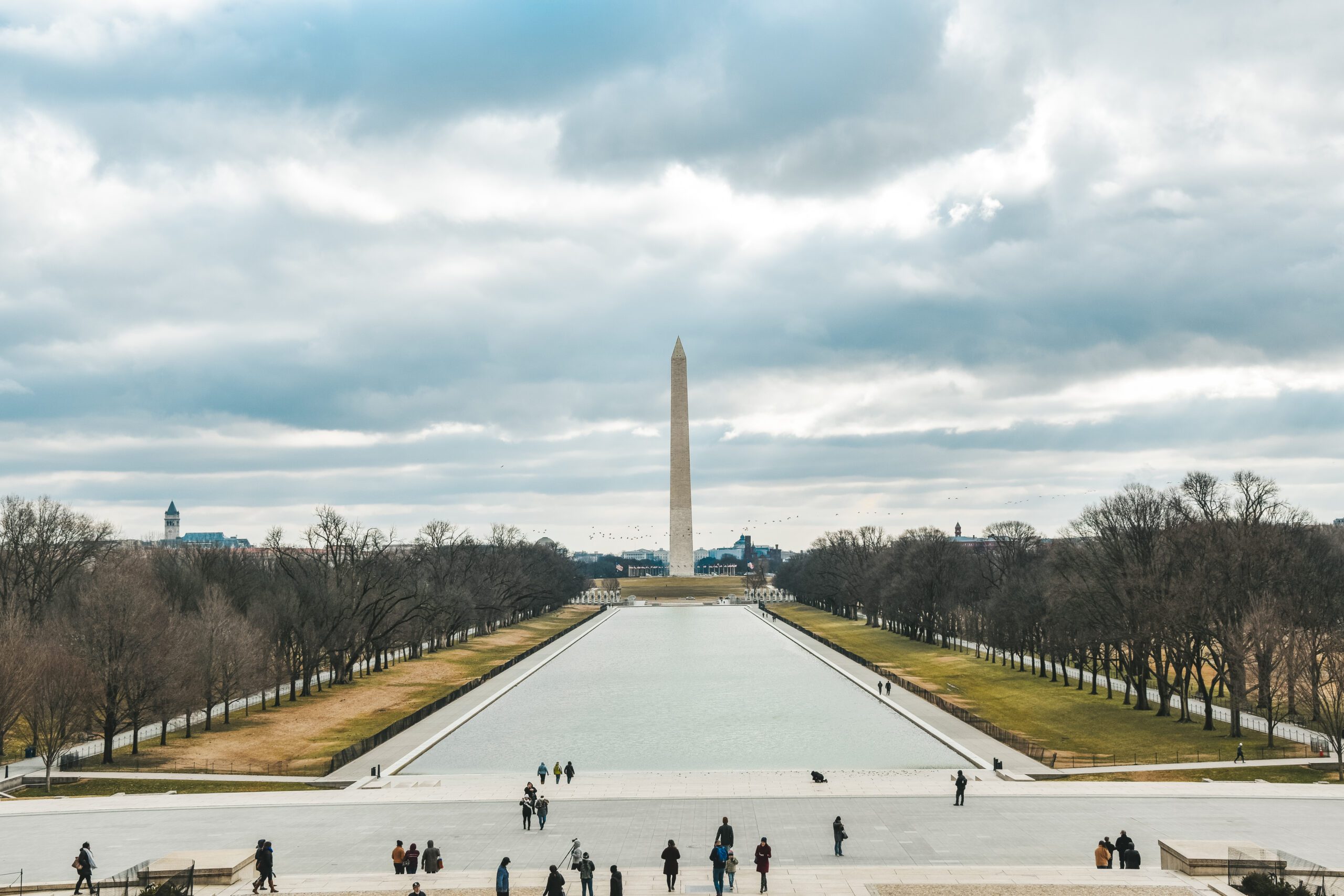
One of Washington D.C.’s most recognizable features is the National Mall, an expansive green space bordered by monuments and memorials. The Washington Monument, an obelisk honoring the first U.S. president, dominates the skyline. At one end of the Mall stands the impressive Lincoln Memorial, while the imposing U.S. Capitol, the epicenter of American politics, anchors the other.

The Smithsonian Institution oversees a collection of world-renowned museums and galleries in Washington D.C., including the National Air and Space Museum, the National Museum of American History, and the National Museum of African American History and Culture. These cultural institutions provide profound insights into the history, science, art, and culture of the United States.

Washington D.C. is also home to numerous historical sites, such as the White House, the official residence of the President, and the Library of Congress, the largest library in the world. The Library shines with architectural grandeur and houses an extensive collection of literary works and historical documents.

Along the Potomac River, the historic Georgetown neighborhood features cobblestone streets, boutique shops, and restaurants, offering a charming contrast to the formal ambiance of the city’s political district.

Beyond history and politics, Washington D.C. is a haven for art and culture enthusiasts. The John F. Kennedy Center for the Performing Arts hosts opera, theater, music, and dance performances, while vibrant neighborhoods like Adams Morgan and Dupont Circle thrive with art galleries and trendy dining spots.

Culinary experiences in the city are equally diverse, ranging from fine dining establishments to local eateries serving dishes from around the globe. Washington D.C. is a dynamic destination that offers something for every traveler, blending its historical significance with a modern, multicultural flair.

Capitol building

The United States Capitol, is one of the most iconic buildings in the United States. It serves as the seat of the U.S. Congress, the legislative branch of the federal government. Here are some fascinating facts and details about the Capitol:

  • Location: The Capitol is situated in Washington, D.C., on the eastern end of the National Mall. Its address is 100 Constitution Avenue NE, Washington, D.C. 20510.
  • Architecture: Designed in the neoclassical style, the Capitol features an impressive dome and marble facades. The building’s original architect was William Thornton, but its construction and later expansions were overseen by architects such as Benjamin Henry Latrobe and Thomas U. Walter.
  • The Dome: One of the Capitol’s most striking features is its dome, made of cast iron weighing approximately 19.5 million pounds (8,909,200 kg). It is crowned by the “Statue of Freedom,” a 19.5-foot (6.3-meter) tall bronze statue symbolizing the liberty of the American people.
  • The Rotunda: Inside the Capitol, the Rotunda is a grand circular hall adorned with paintings and sculptures that depict significant moments in American history and the nation’s development.
  • The U.S. Congress: The Capitol houses the two chambers of Congress: the Senate on the north side and the House of Representatives on the south side.
  • Capitol Hill: The area surrounding the Capitol is called Capitol Hill, named after the building itself. This historic district in Washington, D.C., is home to numerous government buildings and monuments.
  • Visiting the Capitol: The Capitol is open to visitors and offers guided tours that provide insights into the history, architecture, and workings of the U.S. Congress. Visitors may also attend congressional sessions when available.
  • Symbolism: The Capitol is a powerful symbol of American democracy and the legislative process. It is the site where laws are created and where significant national events, such as presidential inaugurations and state funerals, take place.

The United States Capitol is not only an architectural masterpiece but also the epicenter of American political power. It is a must-see landmark for anyone interested in the history, politics, and culture of the United States.

Washington Monument

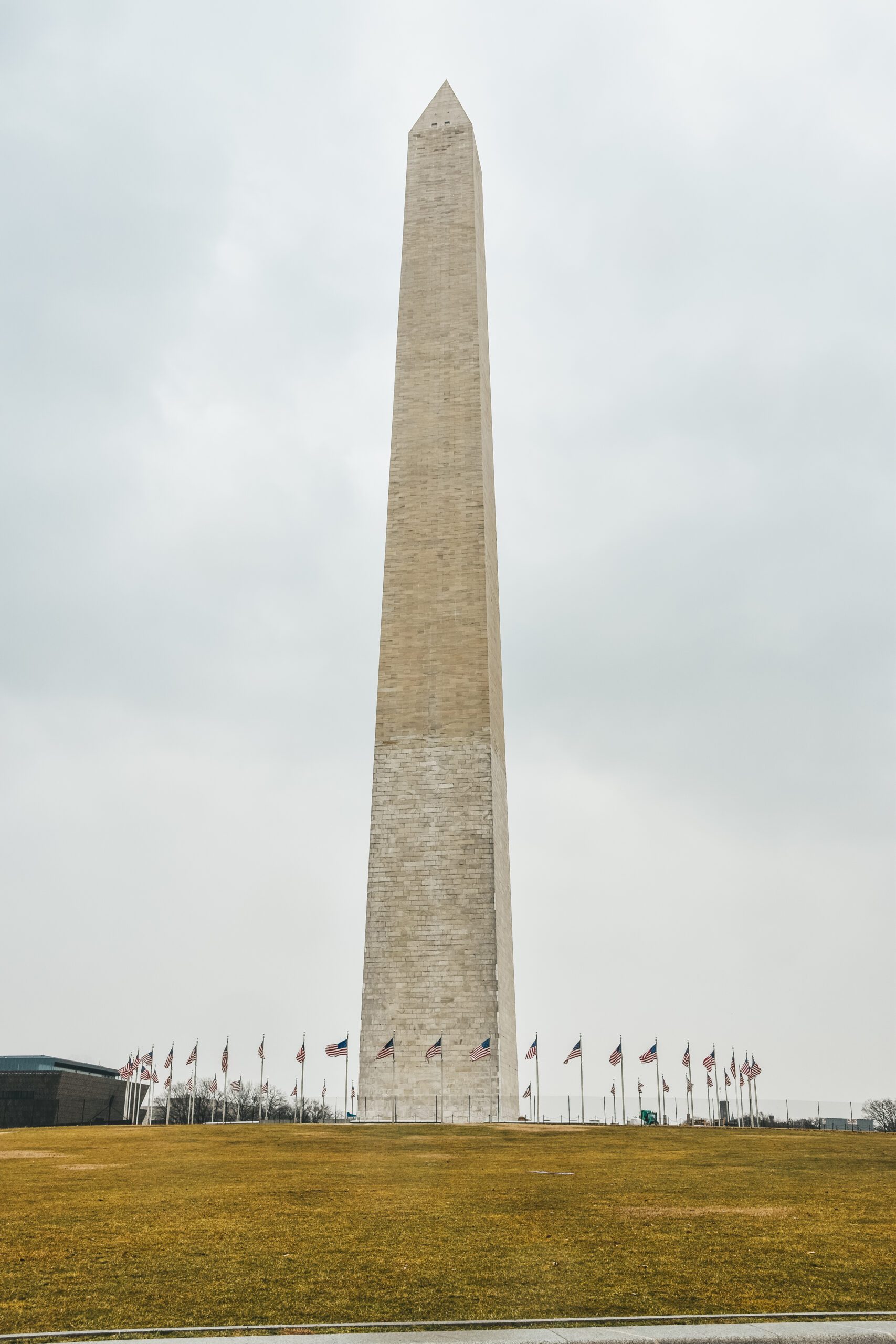
Het Washington Monument is een van de meest iconische en herkenbare monumenten in de Verenigde Staten. Dit indrukwekkende monument is gelegen in de National Mall van Washington D.C. en is een eerbetoon aan George Washington, de eerste president van de Verenigde Staten en een van de grondleggers van de natie. Hier zijn enkele interessante feiten en details over het Washington Monument:

Het Washington Monument heeft een opvallende obelisk-vorm en is 169 meter (555 voet) hoog. Het is gebouwd van wit marmer, graniet en zandsteen en is het hoogste stenen monument ter wereld. De obelisk staat op een vierkante basis en wordt geleidelijk smaller naar boven toe.

De bouw van het monument begon in 1848, maar het project werd tijdelijk stopgezet vanwege financiële problemen en de Amerikaanse Burgeroorlog. Pas in 1884 werd de bouw hervat en in 1888 werd de top bereikt. Het monument werd voltooid in 1884 en officieel ingewijd op 21 februari 1885.

Het Washington Monument eert niet alleen George Washington, maar dient ook als symbool van nationale eenheid en onafhankelijkheid. Het monument wordt vaak geassocieerd met de idealen van vrijheid en democratie die de Verenigde Staten vertegenwoordigen.

Bezoekers kunnen de top van het monument bereiken via een lift en vanaf daar genieten van een prachtig uitzicht op Washington D.C. en de omliggende gebieden. Bij helder weer kun je de Potomac-rivier, het Capitool, het Lincoln Memorial en andere bezienswaardigheden zien.

Het Washington Monument bevindt zich in de National Mall, een uitgestrekt parkachtig gebied dat vol staat met monumenten, gedenktekens en musea die de Amerikaanse geschiedenis en cultuur belichten. Het is een populaire bestemming voor toeristen en een centrale locatie voor nationale evenementen.

Het Washington Monument is niet alleen een eerbetoon aan George Washington, maar ook een monument voor de idealen en waarden van de Verenigde Staten. Het is een belangrijke trekpleister voor toeristen en een symbool van nationale trots en eenheid.

Lincoln Memorial

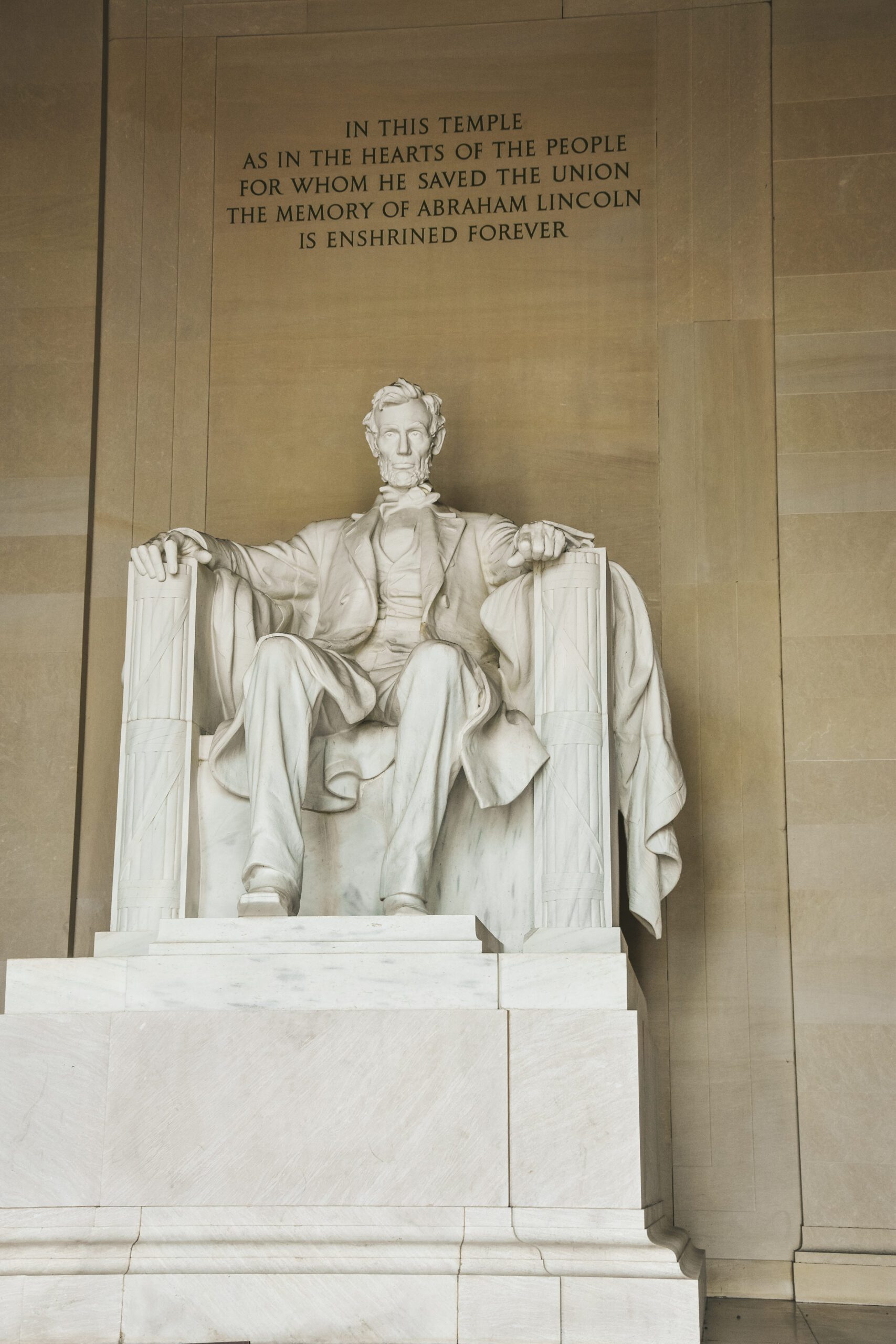
The Lincoln Memorial is one of the most prominent and revered monuments in Washington, D.C. It is a national monument dedicated to the 16th President of the United States, Abraham Lincoln. Located at the western end of the National Mall, the monument attracts millions of visitors annually and serves as a significant symbol of American history and values. Here are some important facts and details about the Lincoln Memorial:

Architecture and Design

The Lincoln Memorial features neoclassical architecture and was designed by architect Henry Bacon. The monument is striking due to its marble columns, steps, a large statue of Abraham Lincoln, and inscriptions of two of Lincoln’s famous speeches, the Gettysburg Address and his Second Inaugural Address.

Significance

The monument honors not only the 16th President of the United States but also his leadership during one of the most turbulent periods in American history, the American Civil War. The Lincoln Memorial symbolizes freedom, democracy, equality, and the ideals that Abraham Lincoln embodied.

Lincoln Statue

The monument houses a 19-foot (5.8 meters) statue of Abraham Lincoln, designed by sculptor Daniel Chester French. The statue depicts Lincoln seated in a chair, gazing out over the Reflecting Pool and the Washington Monument.

Inscriptions

Inside the memorial, inscriptions of two of Lincoln’s famous speeches can be found. The Gettysburg Address, beginning with the words “Four score and seven years ago,” and the Second Inaugural Address, with the famous phrase “With malice toward none, with charity for all.

Historical Events

The Lincoln Memorial has been the site of numerous national events and protests. One of the most memorable events was the famous March on Washington for Jobs and Freedom in 1963, where Dr. Martin Luther King Jr. delivered his renowned “I Have a Dream” speech.

Visitor Experience

The Lincoln Memorial is open to the public and attracts visitors from all over the world. Visitors can climb the steps, admire the statue of Lincoln, and enjoy breathtaking views of the National Mall.

Symbolism

The Lincoln Memorial is not only a historic monument but also an important symbol of the American ideals of freedom, equality, and democracy. It is a place for reflection, remembrance, and tribute to one of the greatest leaders in American history, Abraham Lincoln. It continues to be a major attraction for both Americans and international visitors.

National Mall

The National Mall is an iconic, expansive public space in the heart of Washington, D.C., and it is one of the most visited and recognizable locations in the United States. The area spans over more than two miles and includes beautiful parks, monuments, museums, and memorials that reflect the history, culture, and values of the United States. Here are some key facts and details about the National Mall:

The National Mall has a rich history and was originally intended as a public space for the residents of the new capital of the United States. It was designed in the late 18th century and has since grown into an important symbol of American democracy.

The National Mall is home to numerous monuments and memorials that highlight different aspects of American history and culture. Some of the most well-known monuments include the Washington Monument, the Lincoln Memorial, the Thomas Jefferson Memorial, and the Vietnam Veterans Memorial.

Along the National Mall, you will find some of the world’s most prominent museums, including the National Museum of American History, the National Air and Space Museum, the National Museum of Natural History, and the National Gallery of Art. These museums house extensive collections of art, history, science, and culture.

The Reflecting Pool, a long artificial lake stretching between the Lincoln Memorial and the Washington Monument, offers a picturesque view and a symmetrical reflection of these monuments. The Reflecting Pool is also famous for the many historical events that have taken place here.

The National Mall is a popular location for national events and celebrations, such as presidential inaugurations, parades, protests, concerts, and fireworks displays. It is also the site of the annual National Cherry Blossom Festival.

The National Mall offers many opportunities for recreation, such as jogging, cycling, and picnicking. Many people come here to relax, exercise, or simply enjoy nature and the surroundings.

The National Mall is an important tourist destination, attracting millions of visitors from around the world every year. It is a place of education, inspiration, and reflection for those wishing to explore American history and culture.

The National Mall is not only a physical location but also a symbolic and emotional place for Americans and people from around the world. It serves as a tribute to the ideals of freedom, democracy, and equality, offering an unparalleled opportunity to experience and appreciate the history and legacy of the United States.

White House

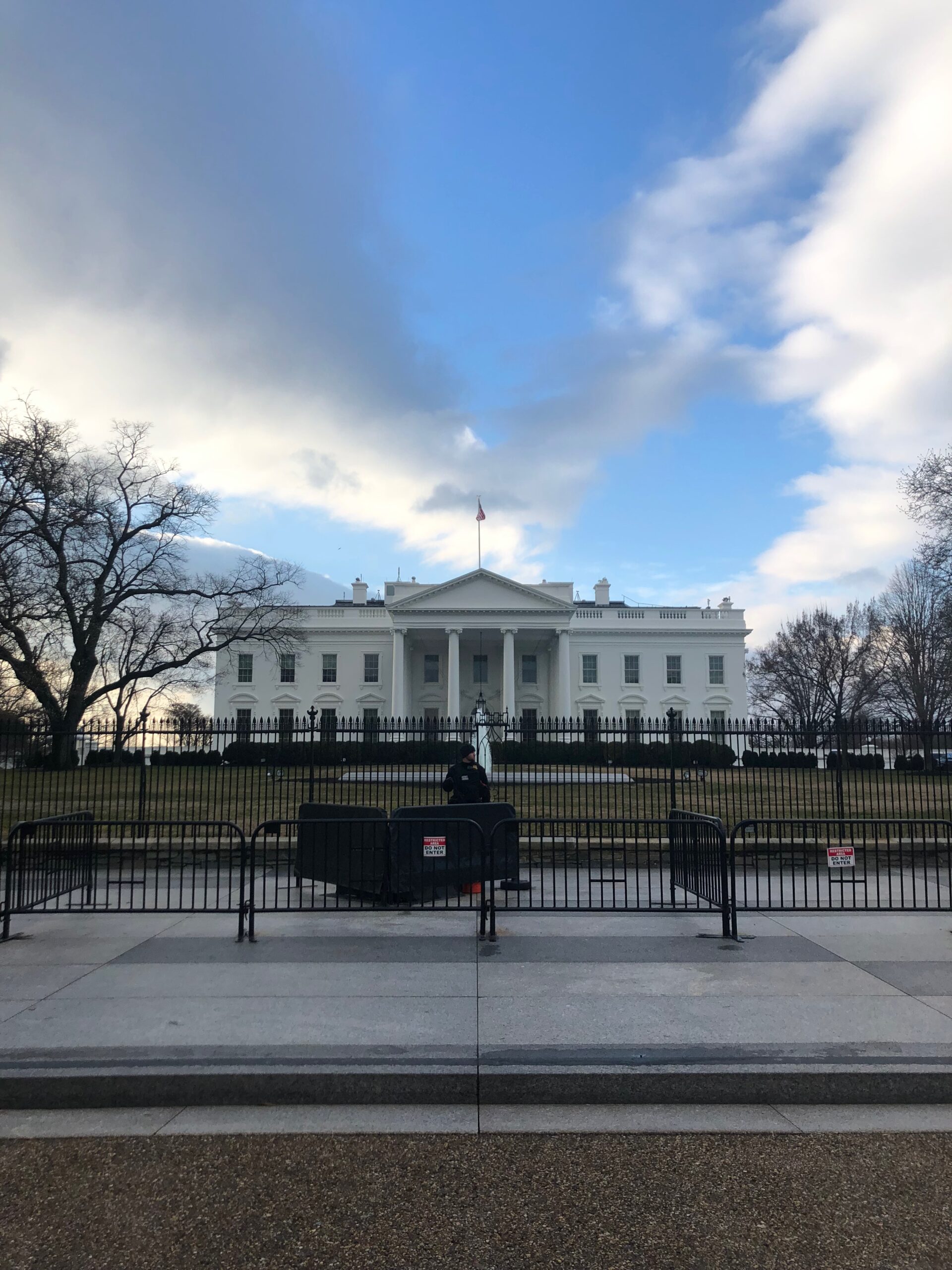
The White House, located at 1600 Pennsylvania Avenue NW in Washington, D.C., is the official residence and workplace of the President of the United States. It is one of the most iconic and recognizable buildings in the world and symbolizes the highest office in the American government. Here are some key facts and details about the White House:

The White House was built between 1792 and 1800 and was the vision of George Washington and architect James Hoban. It was completed during the presidency of the second president of the United States, John Adams. It is the oldest government residence still in use in the United States.

The White House is an example of neoclassical architecture and features a distinctive white facade made from white sandstone. It has multiple colonnades, a front portico, and a prominent dome.

The White House serves as the official residence of the president and their family. It includes private quarters for the president, such as the presidential bedroom, as well as public spaces for official functions and meetings.

In addition to the president’s living quarters, the White House also houses the Oval Office, where the president conducts daily work, and the West Wing, which is where the president’s executive staff is located.

The White House is typically not open to the public for free exploration due to security reasons. However, organized tours are available for visitors, offering the opportunity to explore parts of the building.

The White House has a rich history and has been the site of many significant events, including presidential inaugurations, state dinners, diplomatic meetings, and historical declarations.

The White House also hosts various traditions and events, such as the annual Easter Egg Roll on the lawn, the lighting of the National Christmas Tree, and the reception of foreign heads of state.

Over the years, several renovations and expansions have been made to the White House, including a major reconstruction after the 1814 fire and expansions such as the West Wing (1902) and the East Wing (1942).

The White House is not only the official residence and workplace of the president of the United States but also a symbol of American democracy and government. It has played a central role in American history and remains one of the most recognizable and important buildings in both the United States and the world.