
One World Trade Center
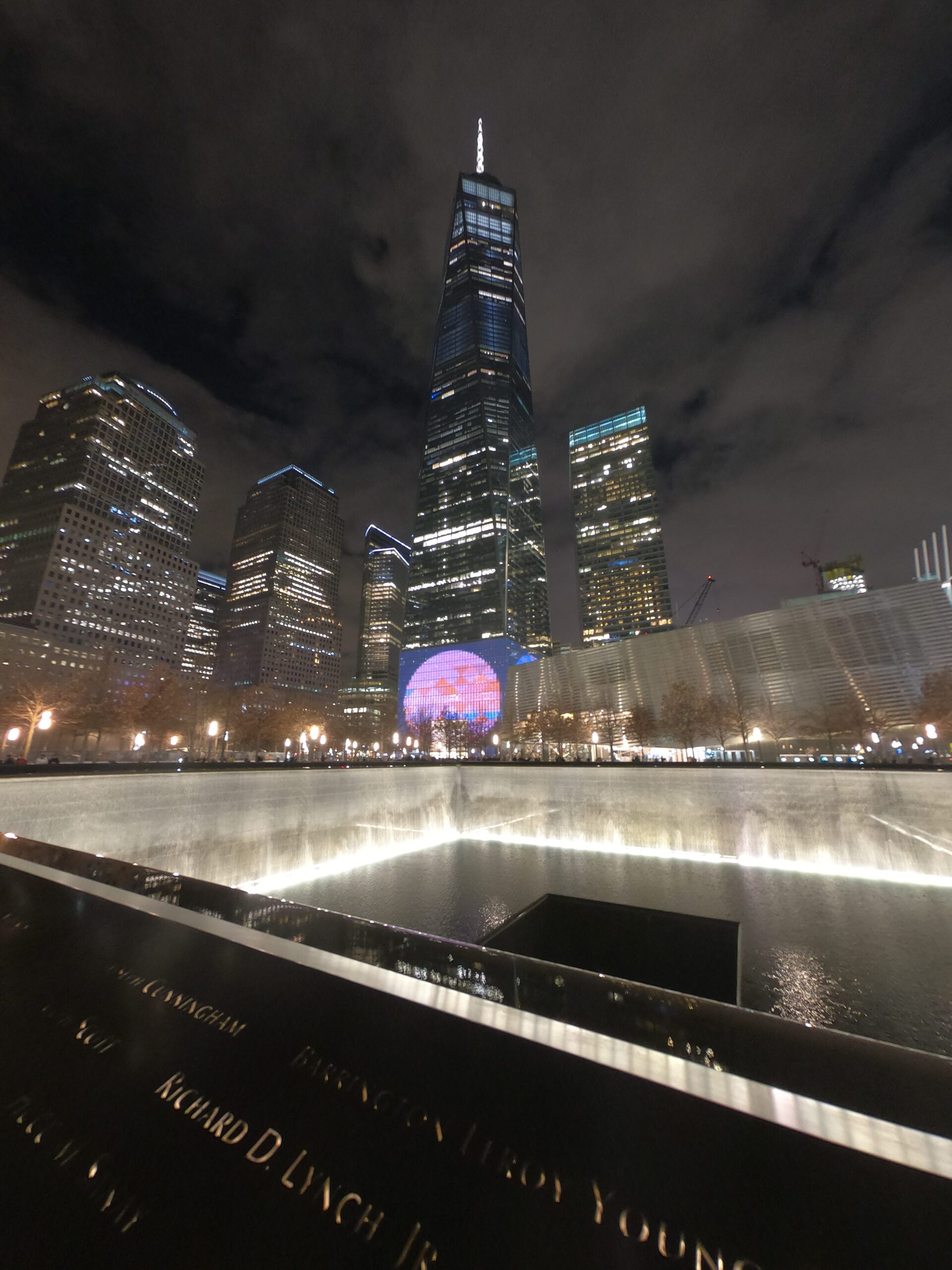
One World Trade Center (also known as the Freedom Tower) is an iconic skyscraper located in Lower Manhattan, New York City. Part of the World Trade Center complex, it stands as a powerful tribute to the tragic events of September 11, 2001. Here are some key details and features of the One World Trade Center:
Construction of One World Trade Center began in 2006, and the building was completed in 2013. It officially opened on November 3, 2014, on the site of the original Twin Towers, which were destroyed in the 9/11 attacks.
Standing at 541 meters (1,776 feet) tall, One World Trade Center is the tallest building in the Western Hemisphere and the seventh tallest building in the world at the time of its completion. Its height is symbolic, referencing the year of the United States Declaration of Independence (1776), serving as a poignant reminder of the country’s resilience.
Designed with deep symbolism in mind, One World Trade Center reflects hope, strength, and recovery in the face of tragedy. It was envisioned not only as an architectural marvel but as a beacon of resilience and renewal for New York City and the nation.
The building was constructed with sustainability at its core, earning a LEED Gold certification for its environmentally friendly features. It includes energy-efficient technologies and uses eco-conscious materials, making it a leader in sustainable architecture.
At the top of the building, visitors can experience the One World Observatory, an observation deck that offers breathtaking, 360-degree views of New York City and beyond. Interactive displays within the observatory provide an educational and immersive experience, sharing the history of the city and the building itself.
Safety was a major consideration in the design of One World Trade Center. The building includes state-of-the-art security features and meets the highest standards for structural integrity, ensuring resilience against future potential threats. The tower’s design incorporates advanced technologies to protect occupants and visitors, including a reinforced core and advanced fireproofing.
One World Trade Center is not just a remarkable feat of engineering but a living monument to the events of September 11, 2001. It serves as a symbol of hope, perseverance, and national recovery. As a vital part of New York City’s skyline, it draws thousands of visitors each year who come to admire its architectural beauty and reflect on its profound significance. Whether from its observatory or from the streets below, the Freedom Tower stands as a testament to the strength and spirit of New York and the United States.

9/11 Memorial
The 9/11 Memorial is a significant site located in Lower Manhattan, New York City, dedicated to commemorating the tragic events of September 11, 2001, when the Twin Towers of the World Trade Center were attacked in a terrorist assault. Here are some key details about Ground Zero and the 9/11 Memorial:
The 9/11 Memorial (officially the National September 11 Memorial & Museum) is a solemn and moving tribute to the victims of the 9/11 attacks. It features two large reflecting pools, which are situated on the original footprints of the Twin Towers.
Designed by architects Michael Arad and Peter Walker, the memorial’s design incorporates two massive waterfalls that flow into deep, square-shaped pools. These waterfalls symbolize the former footprints of the Twin Towers and serve as a poignant representation of the lives lost on that fateful day. The cascading water creates an atmosphere of quiet reflection, inviting visitors to pause and honor the victims.
Surrounding the pools is a bronze parapet engraved with the names of nearly 3,000 people who lost their lives during the 9/11 attacks, as well as those killed in the 1993 World Trade Center bombing. The names are arranged by the individuals’ relationships to one another, providing a sense of personal connection and remembrance. This dedication to each victim’s identity makes the memorial not just a historical marker, but a deeply personal place for mourning.
The 9/11 Memorial and the surrounding area, which includes the National September 11 Museum, stand as an important tribute to those who perished in the attacks and as a place for reflection and remembrance. The memorial draws visitors from around the world, offering them a chance to pay respects to the lives lost and to understand the profound global impact of the 9/11 tragedy. It serves as a cultural and historical monument, reminding us of the enduring strength and resilience of the city, the nation, and the world in the wake of such a devastating event.
Visiting the 9/11 Memorial provides a powerful opportunity to reflect on the events of that day, the impact on the victims’ families, and the broader consequences for global security and geopolitics. It is a place where memory, healing, and hope intertwine, offering a space for both quiet contemplation and shared remembrance.
9/11 Museum
The 9/11 Museum, officially known as the National September 11 Memorial & Museum, is a significant institution dedicated to remembering the tragic events of September 11, 2001, as well as the 1993 World Trade Center bombing. Located at Ground Zero in Lower Manhattan, New York City, the museum’s mission is to document and commemorate the events of 9/11, as well as to preserve the memory of those who lost their lives. Here are some key details about the 9/11 Museum:
The primary mission of the 9/11 Museum is to keep the memory of the 9/11 attacks alive and to tell the story of that day, including the aftermath and its global impact. It serves as both a tribute to the victims and an educational resource for visitors from around the world.
The museum is housed within the base of the One World Trade Center, right next to the reflective pools of the 9/11 Memorial. The building was designed by architects Davis Brody Bond and Snøhetta, incorporating elements that allow visitors to connect deeply with the space.
Inside, the museum features a vast collection of artifacts, photographs, documents, and multimedia exhibits that meticulously document the events of 9/11. The displays include personal stories from survivors, victims, and first responders, as well as artwork and memorials that capture the emotional impact of that day. The exhibits tell the story not only of the attacks themselves but of the heroism and resilience that followed.
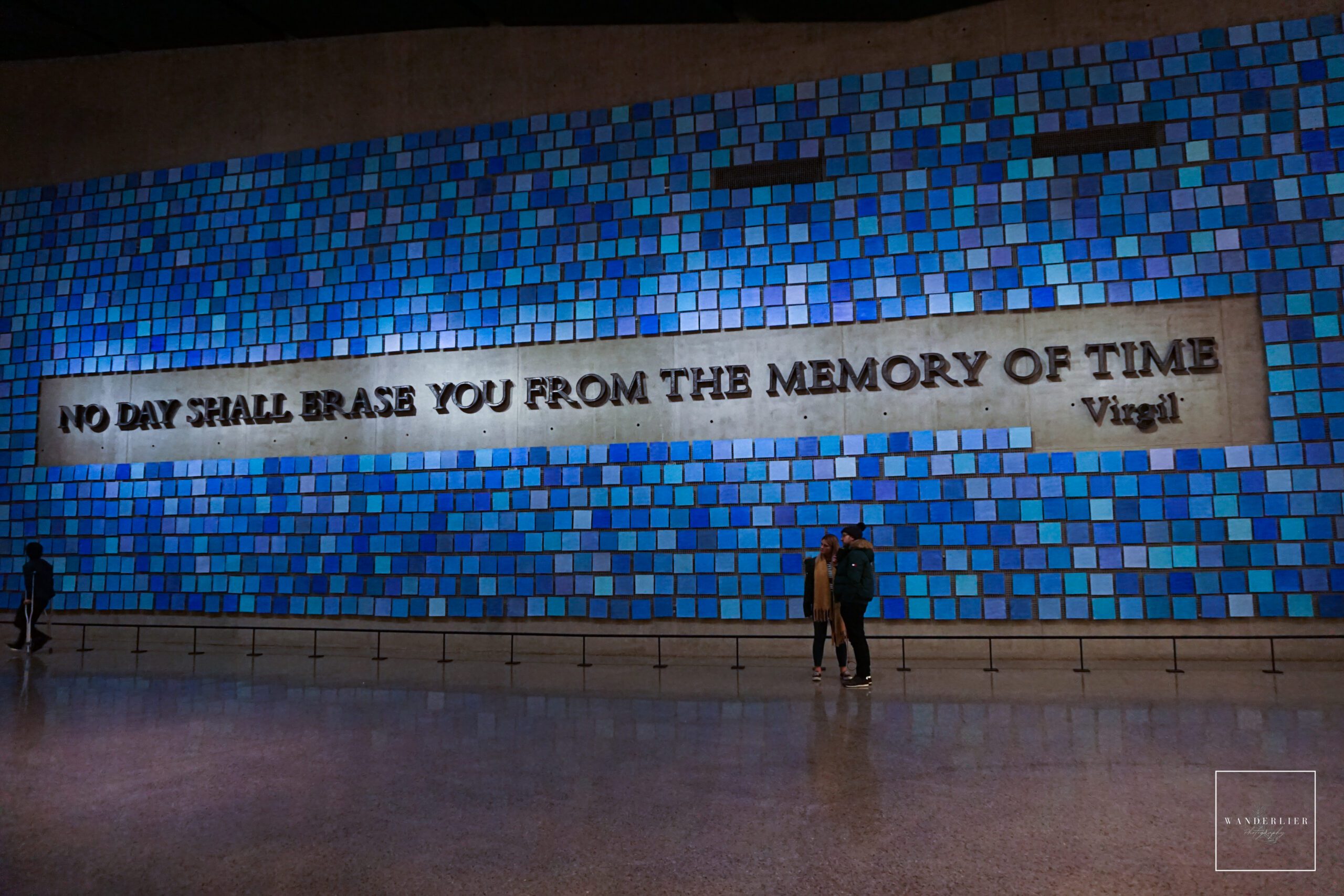
One of the most poignant sections of the museum is the “In Memoriam” gallery, where the names of all the victims of the 9/11 attacks and the 1993 bombing are inscribed. This is a powerful, somber tribute to those who lost their lives that day, allowing visitors to pause and reflect on the individuals behind the tragedy.
A notable artifact in the museum is the “Survivors’ Stairs,” a concrete staircase used by many individuals to escape the Twin Towers after the attacks. This symbol of escape and survival serves as a tangible reminder of the resilience and determination of those who lived through the events of 9/11.
In addition to its permanent exhibits, the 9/11 Museum hosts temporary exhibits on related topics, such as art, history, and culture. These exhibits deepen the visitor’s understanding of the attacks and their far-reaching effects.
The museum also provides educational programs and guided tours for schools and groups, helping to foster a deeper understanding of the 9/11 events and their ongoing significance.
The 9/11 Museum is an essential place of reflection and remembrance. It offers visitors the opportunity to think about the events of 9/11, the courage of those who responded, and the global impact of the attacks. It is a place where visitors from around the world come to honor the victims and to reflect on how the tragedy shaped the modern world.
Statue of Liberty
The Statue of Liberty is one of the most iconic symbols of the United States and is globally recognized as a representation of freedom and democracy. Here are some key details and features of the Statue of Liberty:
The Statue of Liberty was a gift from the French people to the United States, officially unveiled in 1886. It was designed by French sculptor Frédéric Auguste Bartholdi, while the internal framework was designed by Gustave Eiffel, the famous engineer behind the Eiffel Tower in Paris.
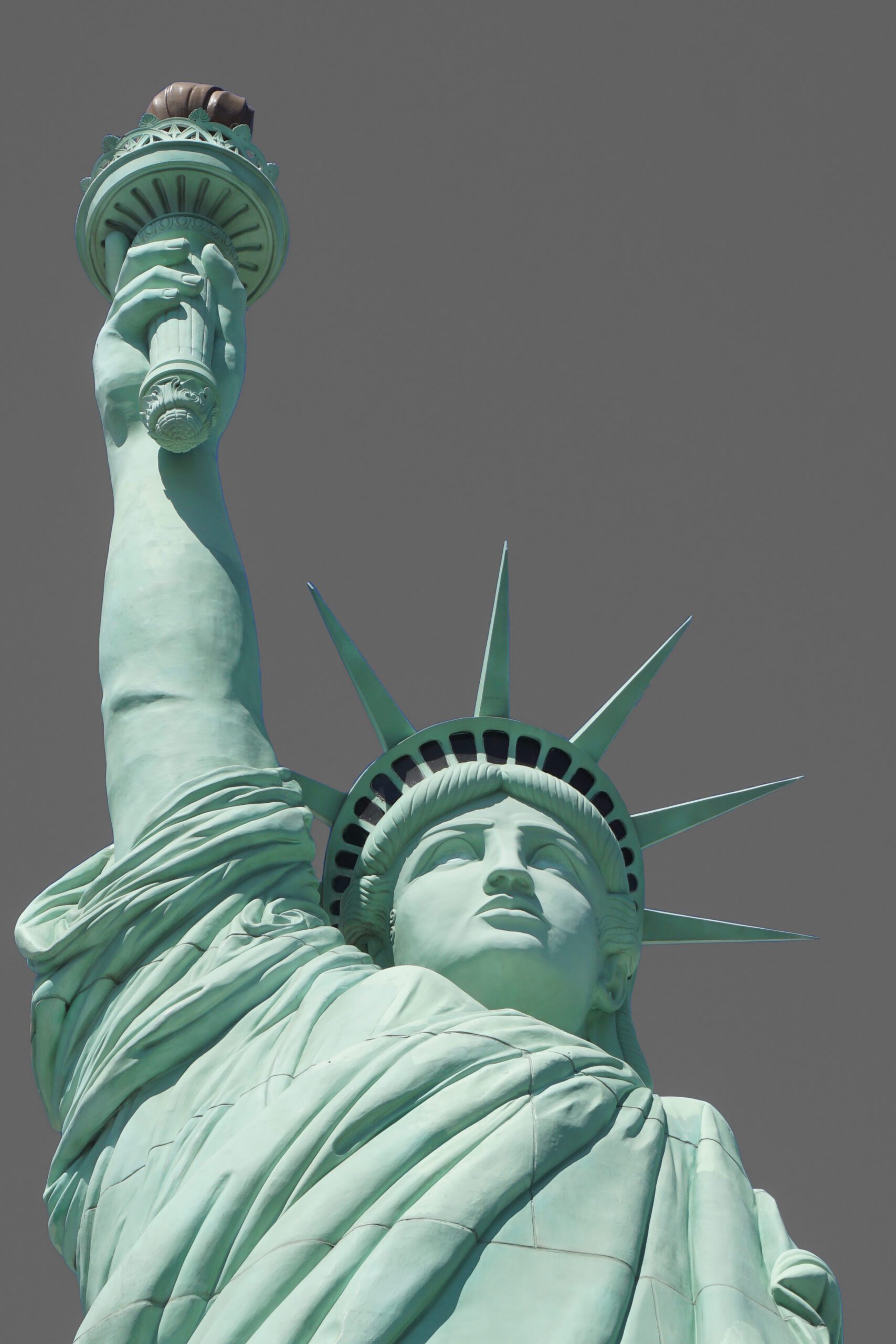
The statue symbolizes freedom and democracy. It was inspired by the ancient Roman goddess Libertas and depicts a female figure holding a torch high, representing the light of freedom. In her other hand, she carries a tablet inscribed with “JULY IV MDCCLXXVI,” referring to July 4, 1776, the date of the Declaration of Independence of the United States.
The Statue of Liberty stands on Liberty Island in New York Harbor, near Manhattan. The statue gazes out over the harbor, welcoming visitors arriving by ferry.
The statue itself stands about 46 meters tall, but with its pedestal and the torch, the total height is approximately 93 meters.
Visitors can reach Liberty Island by ferry from Battery Park in Manhattan. A limited number of visitors also have the opportunity to climb to the crown of the statue, offering a stunning panoramic view of the city and the harbor.
On Liberty Island, there is also the Statue of Liberty Museum, which highlights the history of the statue and its significance to the United States. Visitors can learn about the statue’s creation, its symbolism, and the ideals it represents.
In recent years, the Statue of Liberty has undergone extensive renovations to improve the structure and accessibility. These updates have ensured that the statue will be preserved for future generations.
The Statue of Liberty is not only a national monument, but also a symbol of hope and freedom for people around the world. It has inspired many and continues to welcome immigrants arriving in the United States in search of a better life.
The Statue of Liberty is more than just a national symbol; it is a global icon of freedom and democracy. It attracts millions of visitors annually, who come to admire the statue, learn about its history, and celebrate the meaning of liberty.
Times Square
Times Square, often referred to as “The Crossroads of the World,” is an iconic and vibrant plaza located in the heart of Manhattan, New York City. Known globally for its bright, illuminated billboards, theaters, shopping venues, and lively atmosphere, Times Square is a symbol of the energy and excitement that define New York. Here are some interesting details about Times Square:
Times Square is located at the intersection of Broadway and Seventh Avenue, right in the heart of Midtown Manhattan. It is bounded by West 42nd Street to the south and West 47th Street to the north.
This area is the epicenter of New York’s famous Broadway theater district. Times Square is home to numerous renowned theaters, including the New Amsterdam Theatre, where Disney’s The Lion King and other popular Broadway shows are staged. The district attracts theatergoers from all over the world, making it one of the most visited entertainment areas.
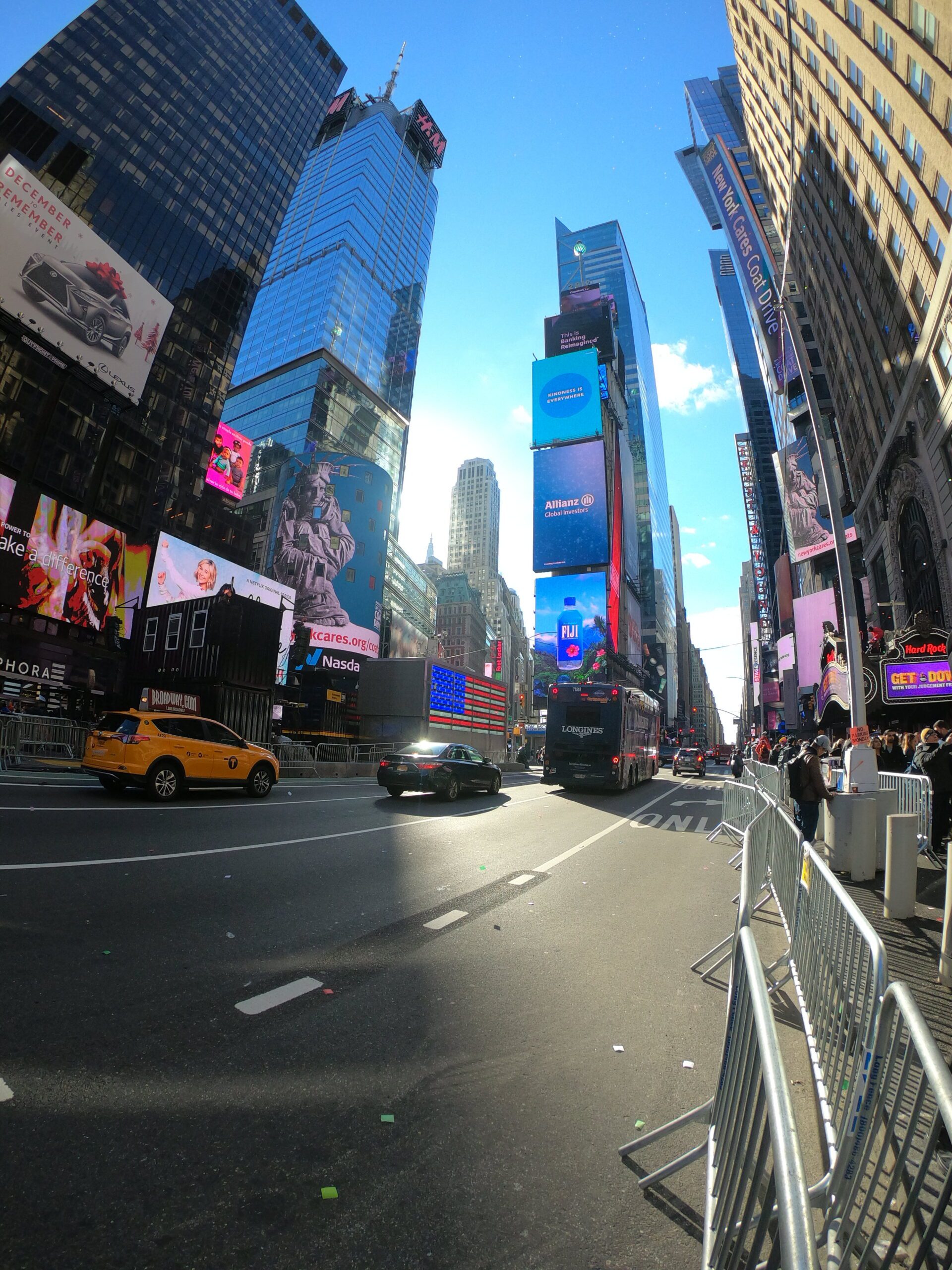
One of the most distinctive features of Times Square is its dazzling and colorful billboards. These electronic advertising screens and displays cover the facades of buildings, lighting up the square day and night. This constant illumination makes Times Square one of the most recognizable and visually striking locations in the world.
Every year, Times Square becomes the focal point of the global New Year’s Eve celebration. Thousands of people gather in the square to watch the iconic crystal ball drop at midnight, marking the start of the new year. This event draws enormous crowds and is broadcast to millions worldwide.
Times Square symbolizes the dynamic and fast-paced energy of New York City. It is often used as a backdrop in films, TV shows, and advertisements, and has become a must-see destination for tourists. Whether you’re taking in a Broadway show, snapping photos of the neon lights, or simply soaking in the atmosphere, Times Square embodies the vibrant spirit of the city that never sleeps.
Empire State Building
The Empire State Building is one of the most iconic skyscrapers in the world and a defining symbol of New York City and the United States. Known for its impressive architecture, height, and historical significance, the Empire State Building remains a key landmark. Here are some interesting facts about this remarkable structure:
Construction of the Empire State Building began in 1930 and was completed in 1931. Initially, it was built as a competition to the Chrysler Building, aiming to determine which building would hold the title of the world’s tallest.
The Empire State Building stands 443.2 meters tall, including the antenna on its roof. Upon its completion, it became the tallest building in the world and held that title until 1970, when the North Tower of the World Trade Center was finished.
Designed in the Art Deco style, the Empire State Building features distinctive characteristics such as elaborately decorated facades, geometric patterns, and ornamental detailing. It is still considered one of the finest examples of Art Deco architecture.
One of the unique aspects of the Empire State Building is its lighting. The top of the building is often illuminated in different colors to celebrate special occasions and holidays. The LED lights can change to create a rainbow effect or raise awareness for various causes and events.
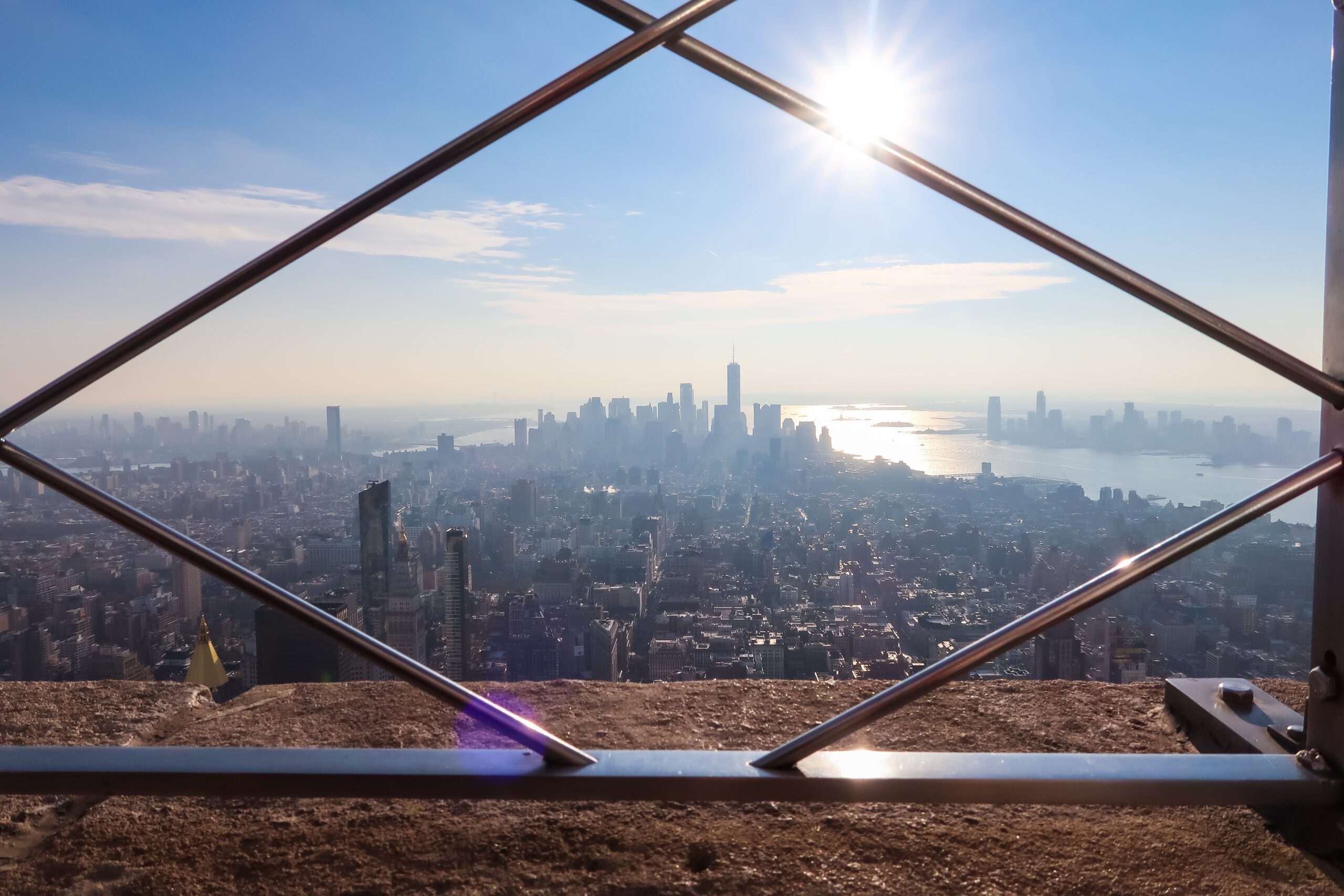
The Empire State Building has two observation decks where visitors can take in panoramic views of New York City. The main observation deck is on the 86th floor, while the top deck, located on the 102nd floor, is one of the highest observation platforms in the world.
In 1986, the Empire State Building was designated a National Historic Landmark due to its cultural and historical significance. Today, it remains one of the most visited landmarks in the world, attracting millions of tourists who come to admire its grandeur and the breathtaking views of the city from its observation decks.
Brooklyn Bridge
The Brooklyn Bridge is one of the most iconic bridges in the world and a standout feature of New York City’s skyline. It is both a technical marvel and a historic symbol with a rich legacy. Here are some fascinating facts about the Brooklyn Bridge:
Construction of the Brooklyn Bridge began in 1869 and was completed in 1883. It was the first suspension bridge in the world to use steel cables and was designed by German immigrant John A. Roebling. After his death, the project was carried on by his son Washington Roebling and his wife, Emily Warren Roebling, who played a crucial role in completing the bridge.
At the time of its completion, the Brooklyn Bridge was the longest suspension bridge in the world, with a main span of 486 meters. The use of steel cables and innovative techniques for the foundation made the construction of this bridge possible.
The bridge features striking Gothic architectural elements, including stone towers with pointed arches and decorative cables. The two stone towers that mark the bridge’s entrances have become iconic landmarks in the city.
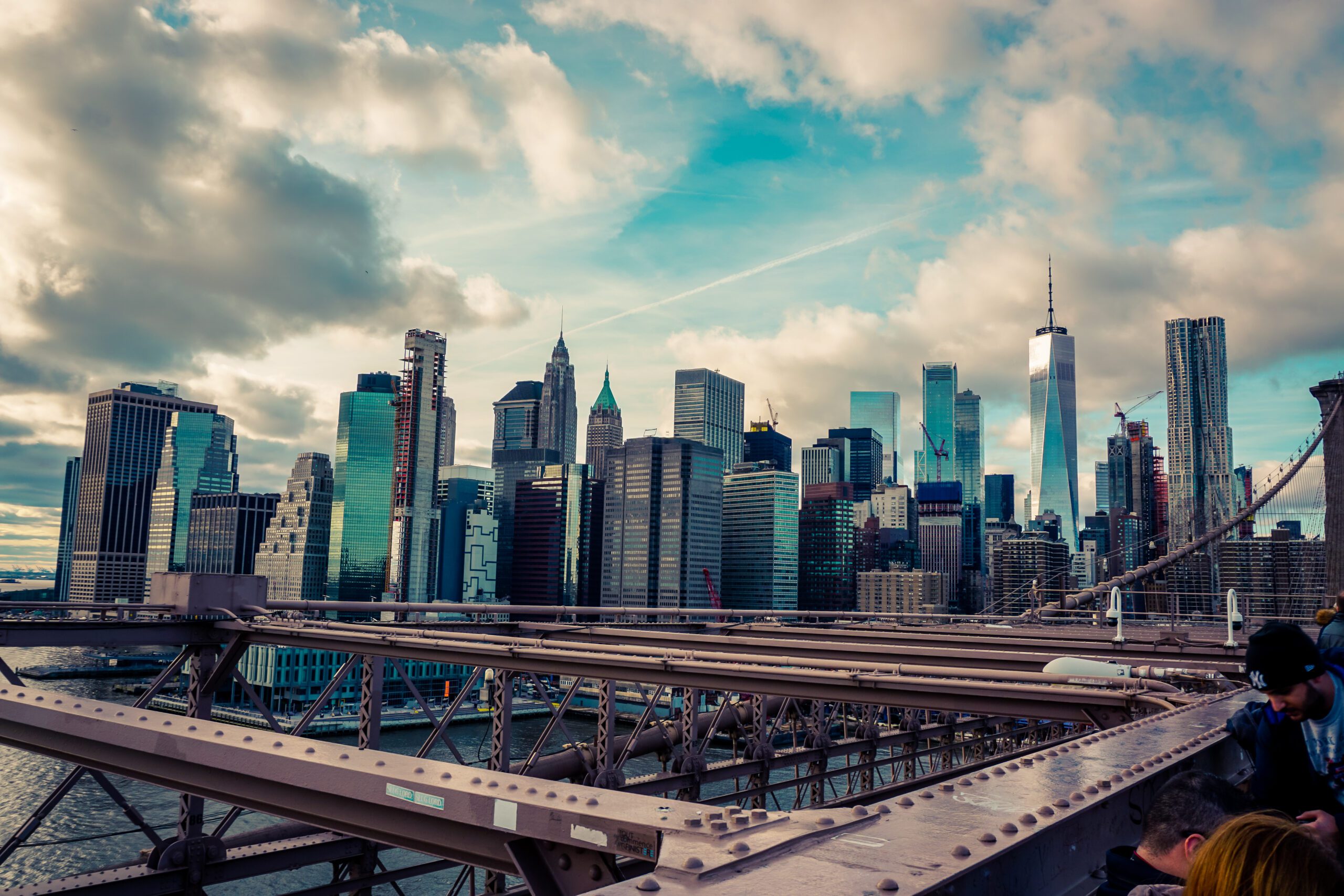
The Brooklyn Bridge connects Lower Manhattan with Brooklyn, allowing pedestrians, cyclists, and vehicles to cross the East River. The elevated pedestrian walkway offers stunning views of the Manhattan skyline, the Statue of Liberty, and the bustling river below.
The Brooklyn Bridge is a symbol of New York City’s growth and development during the late 19th century. It made travel between Manhattan and Brooklyn easier, facilitating urban expansion and helping shape the city’s future. Today, it remains an enduring symbol of engineering achievement, attracting millions of visitors annually who walk or cycle across its historic span while enjoying its breathtaking views.

Chrysler Building
The Chrysler Building is one of the most iconic and recognizable skyscrapers in New York City, often considered a masterpiece of Art Deco architecture. The building has a rich history and significant architectural importance. Here are some fascinating facts about the Chrysler Building:
Construction of the Chrysler Building began in 1928 and was completed in 1930. It was originally intended to serve as the headquarters of the Chrysler Corporation, the American automobile manufacturer, and was designed by architect William Van Alen.
At the time of its completion, the Chrysler Building was the tallest building in the world, standing at 319 meters (1,046 feet). However, it held this title for only a few months before the Empire State Building was finished and surpassed its height.
The Chrysler Building is a stunning example of Art Deco architecture, with its intricate decorative elements and signature ornaments. It stands out above the surrounding buildings and is especially known for its gleaming stainless steel spire and the striking sunburst design at its top.
The spire of the Chrysler Building features impressive angles and curves, resembling the rays of the sun. Its stainless steel surface is adorned with ornate details that pay homage to both the sun and automotive parts, a nod to the automobile industry that Chrysler was a part of.
The Chrysler Building played a key role in the race to become the world’s tallest building and symbolized the growth and innovation of New York City in the 1920s. It was also one of the last skyscrapers to be built before the Great Depression slowed construction in the city.
Today, the Chrysler Building remains an enduring symbol of both architectural beauty and the spirit of the Jazz Age, attracting visitors from around the world who marvel at its distinctive design and historical significance.
Rockefeller Center
The Rockefeller Center, often simply called “Rockefeller Center,” is a large commercial and cultural complex located in the heart of Manhattan, New York City. Known for its iconic art, architecture, entertainment, and annual Christmas decorations, it is one of the most famous landmarks in the city. Here are some interesting details about the Rockefeller Center:
The Rockefeller Center was built during the Great Depression in the 1930s by the Rockefeller family. John D. Rockefeller Jr. spearheaded the project, seeing it as a way to create jobs and stimulate the economy during difficult times. It was one of the largest construction projects of its era and became a symbol of resilience and hope during the economic downturn.
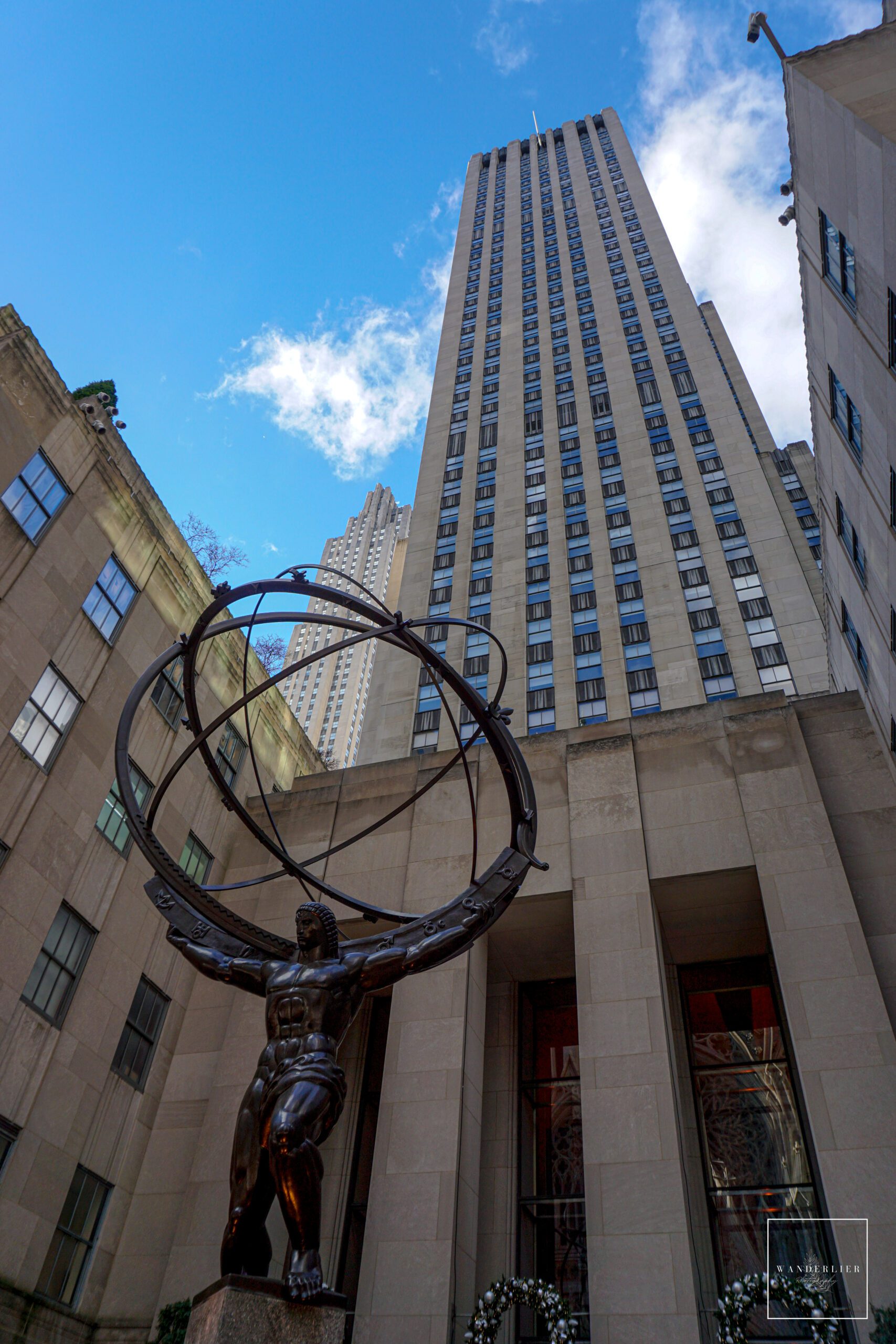
The Rockefeller Center consists of several buildings and attractions, including the famous Radio City Music Hall and the GE Building (also known as 30 Rockefeller Plaza). The GE Building, previously known as the RCA Building, is one of the most recognizable skyscrapers in New York City and houses the renowned “Top of the Rock” observation deck.
The center is home to an impressive collection of art and sculptures, including the famous Prometheus statue located at the front of the GE Building. The complex is known for its public art, which is a significant feature of the center’s design and cultural appeal.
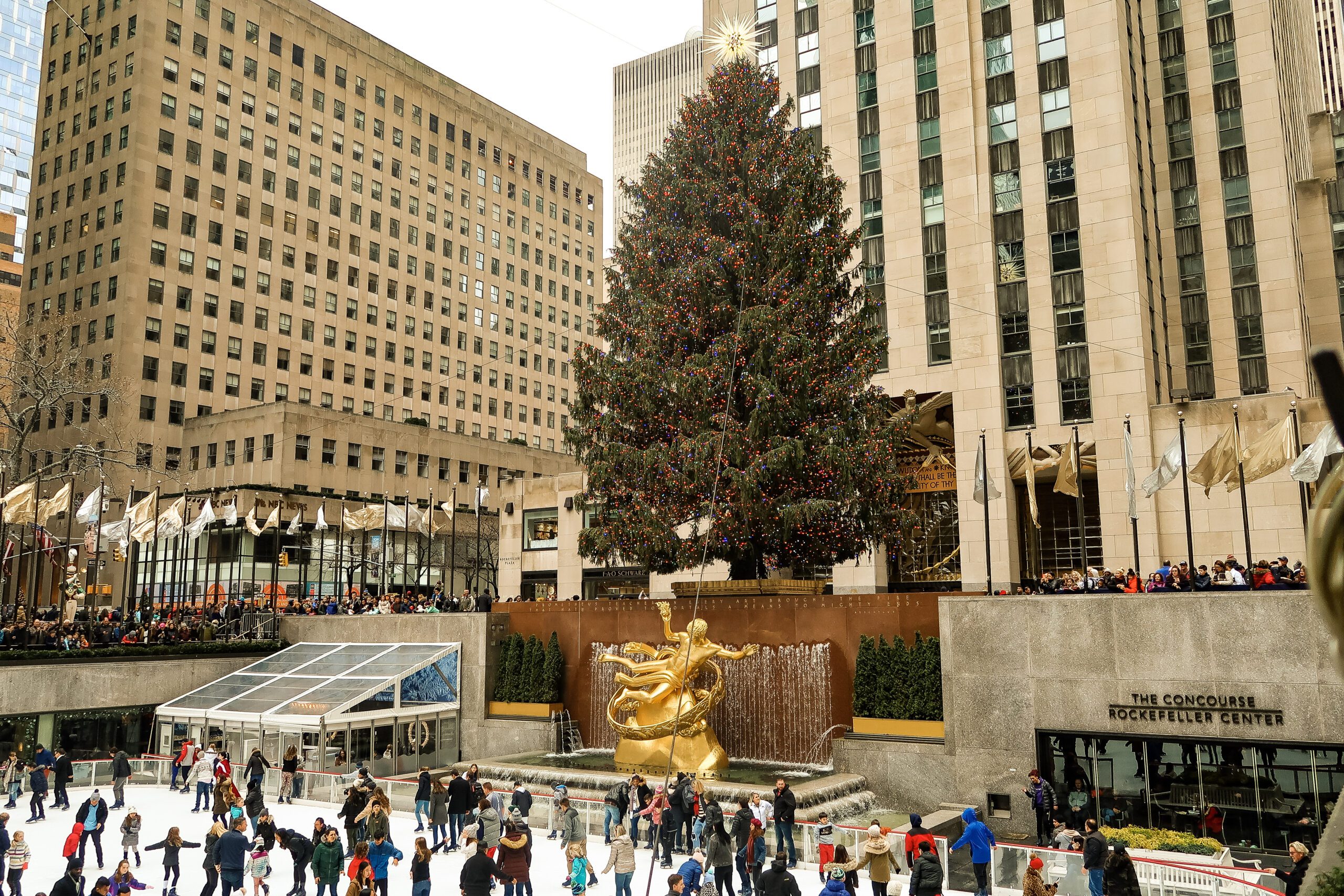
During the Christmas season, the Rockefeller Center becomes a global icon, with its massive Christmas tree and ice skating rink at the plaza. The annual lighting of the tree draws crowds from around the world and has become a cherished holiday tradition.
The “Top of the Rock” observation deck is located on the roof of the GE Building and offers stunning panoramic views of the New York City skyline, including a spectacular view of the Empire State Building. Visitors can enjoy a 360-degree view of the city, making it one of the best vantage points in Manhattan.
In addition to its architectural significance, the Rockefeller Center is also a hub for entertainment, hosting the famous “Saturday Night Live” TV show and numerous other cultural events throughout the year. It is also home to the renowned NBC Studios, making it a center of broadcast media.
Whether you visit for the art, the history, or the spectacular views, the Rockefeller Center remains a must-see destination in New York City, offering something for every visitor.
Grand Central Station
Grand Central Terminal, often informally referred to as “Grand Central Station,” is one of the most iconic and historic train stations in the world. Located in the heart of Manhattan, New York City, it holds a rich history and serves as both a major transportation hub and a cultural landmark. Here are some interesting details about Grand Central Terminal:
History: Grand Central Terminal opened in 1913 as a replacement for an earlier station from 1871. The station was designed by the architectural firm Reed and Stem in collaboration with engineer William Wilgus. The construction of Grand Central was part of a broader effort to modernize New York’s transportation system at the turn of the 20th century.
Architecture: The station is built in the Beaux-Arts style and is renowned for its grandeur and decorative features. Its majestic facade, large arched windows, vast concourse, and marble staircases are just some of the striking architectural elements that make Grand Central Terminal a masterpiece of design.
One of the most remarkable features of Grand Central Terminal is its astronomical clock, located in the central concourse. The ceiling of the concourse is painted with a beautiful depiction of the night sky as it appeared in 1913, complete with constellations and the twelve zodiac signs. This celestial design adds to the station’s magical and timeless atmosphere.
Iconic Clock and Meeting Spot: The Grand Central Terminal’s main information booth is a popular meeting point, often referred to simply as “the clock.” The iconic clock, made of opal and located above the booth, has become a symbol of the station and is a common landmark for people to meet.
Transportation Hub: Grand Central is an essential transportation center, primarily serving as the terminus for the Metro-North Railroad, which connects New York City with suburban areas in New York and Connecticut. It also provides access to the New York City Subway through the nearby Grand Central-42nd Street station, making it a critical node for commuters and travelers in the city.
Cultural Significance: Beyond its function as a transportation hub, Grand Central Terminal is also an important cultural and historical site. The station has been featured in countless films, television shows, and books, making it a familiar icon in popular culture. The terminal is also home to a variety of shops, restaurants, and even a hidden level of dining options, like the famous Oyster Bar, adding to its appeal as a destination in itself.
Renovation and Preservation: Over the years, Grand Central has undergone several renovations and restorations to preserve its grandeur and functionality. Its 1998 renovation was a significant effort to return the terminal to its former glory, restoring its historic features while updating its infrastructure.
Grand Central Terminal is not only a place to catch a train; it is a symbol of New York City’s architectural beauty, a piece of living history, and an essential part of the city’s vibrant cultural landscape. Whether you’re commuting, touring, or simply admiring its splendor, Grand Central Terminal is a must-visit landmark that captures the spirit of New York.

Madison Square Garden
Madison Square Garden, often abbreviated as MSG, is one of the most iconic and legendary venues in the world. Located in Manhattan, New York City, it hosts a wide range of events, including concerts, sporting events, entertainment shows, and more. Here are some interesting details about Madison Square Garden:
History and Evolution: Madison Square Garden first opened its doors in 1879 and has since been rebuilt and renovated several times at different locations in Manhattan. The current version of Madison Square Garden, which opened in 1968, is the fourth incarnation of the venue. It is located above Pennsylvania Station, making it a central and easily accessible destination in the heart of New York City.
Sports: MSG is home to two major professional sports teams: the New York Knicks (NBA) and the New York Rangers (NHL). The venue regularly hosts basketball games, ice hockey matches, and other sporting events, making it a major center for sports in New York. It also occasionally holds events for boxing, wrestling, and college sports.
Concerts and Entertainment: One of the most celebrated aspects of Madison Square Garden is its long history as a premier concert venue. Over the years, some of the world’s biggest artists and bands have performed here, including legends like Elvis Presley, The Rolling Stones, and Billy Joel. The Garden has become a staple of musical history, with countless concerts and tours making a stop at this legendary location. It is often considered a “must-play” venue for musicians at the peak of their careers.
Capacity: Madison Square Garden’s seating capacity varies depending on the event. For concerts, the venue can accommodate between 18,000 and 20,000 spectators. The flexibility of its design allows for different configurations to suit various types of events, from intimate performances to large-scale sports matches.
Central Location and Accessibility: Madison Square Garden is conveniently located above Pennsylvania Station, one of the busiest transit hubs in New York City. This prime location makes it easily accessible by subway, bus, and Long Island Rail Road, providing easy access for visitors coming from all over the city and beyond. The Garden is also adjacent to the Penn Plaza complex, making it a central spot for tourists and locals alike.
Cultural Impact: Over its long history, Madison Square Garden has become a cultural icon, hosting not only sports and concerts but also political events, award shows, and even large-scale spectacles like the circus. It has earned a reputation as a versatile venue capable of hosting almost any type of event, and its significance goes far beyond entertainment—it is a key part of New York’s identity and cultural landscape.
In addition to being a world-renowned venue, Madison Square Garden is also home to numerous legendary moments in history. Whether you’re attending a concert, catching a Knicks game, or simply admiring its iconic status, MSG is a must-see venue that has left a lasting impact on both New York City and the world.

Central Park
Central Park is a vast and iconic urban park located in the heart of Manhattan, New York City. Spanning approximately 843 acres, it serves as a lush green oasis amidst the surrounding concrete jungle. The park is a popular destination for both locals and tourists, offering a wide range of recreational opportunities and scenic spots. Here are some interesting facts and details about Central Park:
History and Design:
Central Park was designed in the 19th century by landscape architects Frederick Law Olmsted and Calvert Vaux. Opened in 1858, it is considered one of the first landscaped urban parks in the United States. The park was developed as part of a vision to provide New Yorkers with a natural escape from the rapidly industrializing city.
Design Elements:
The park’s design is a masterpiece of landscape architecture, incorporating expansive lawns, picturesque lakes and ponds, wooded areas, rose gardens, fountains, and winding paths for walking, cycling, and jogging. Central Park offers a beautiful contrast to the surrounding skyscrapers, providing a peaceful retreat from the bustling city. The park is divided into several distinct areas, each with its own character and appeal, from the serene lakes to the more active recreational zones.
Recreational Opportunities:
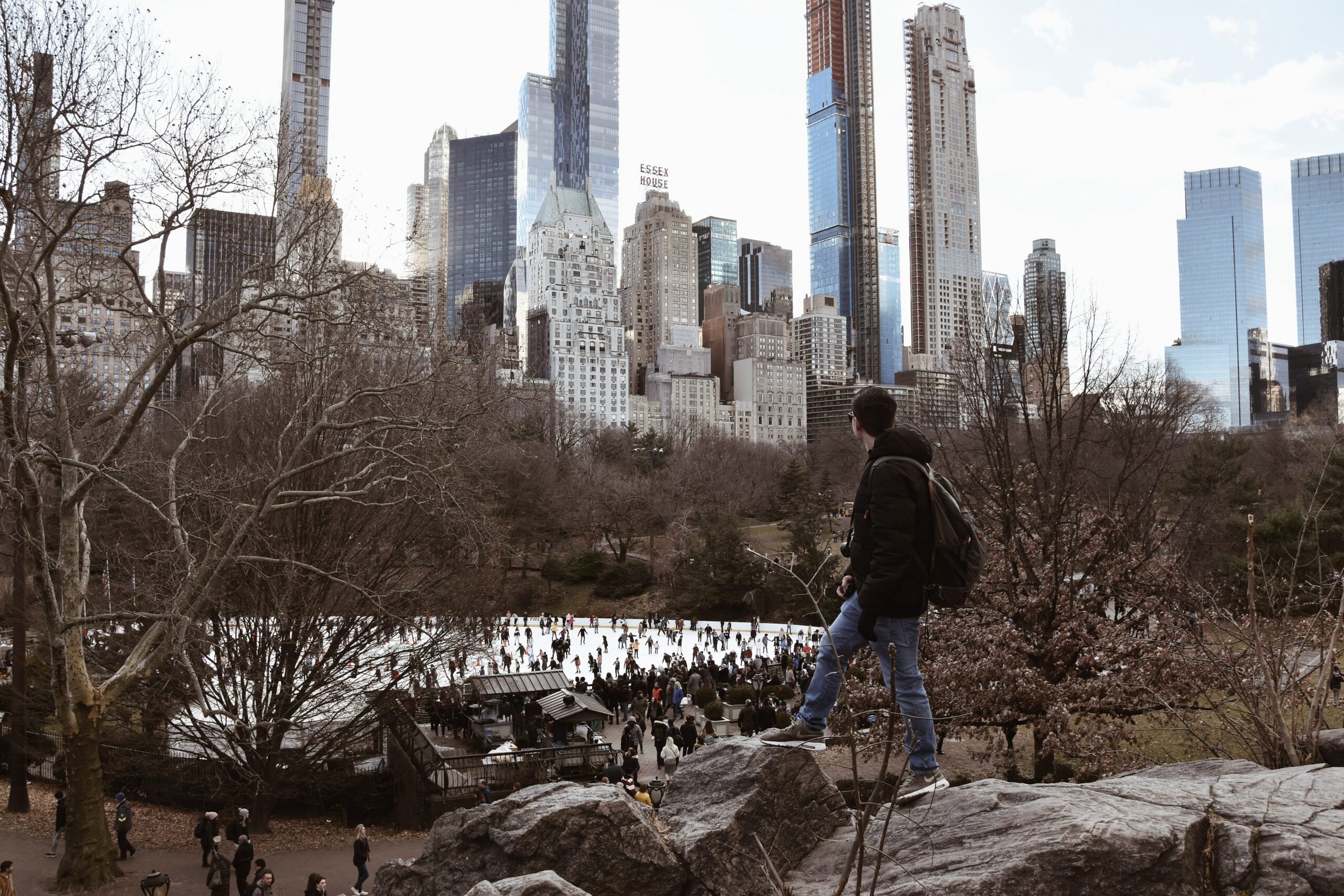
Central Park is a hub of outdoor activities and sports. It features sports fields, tennis courts, playgrounds, and even an ice skating rink in the winter. The park is also a great place for cycling, and bike rentals are available for those who want to explore its many paths and roads. Visitors can also take part in activities like boating on the lakes during the warmer months, or enjoy a leisurely stroll or jog on the various trails.
Famous Landmarks:
Central Park is home to several iconic landmarks that attract visitors from all over the world. The Bethesda Terrace and Fountain is a well-known gathering spot, with its beautiful views of the surrounding lake and its grand staircase leading down to the water. Belvedere Castle, perched on a hill, offers spectacular views and houses a visitor center. Another famous structure is the Bow Bridge, a charming cast-iron bridge that has been featured in numerous films and is a favorite photo spot.
Central Park Zoo:
The Central Park Zoo is a popular family-friendly attraction located near the southeast corner of the park. It is home to a variety of animals, including penguins, snow leopards, and red pandas. The zoo also features a children’s zoo, where kids can interact with animals and learn about wildlife conservation.
Water Features:
The park boasts several ponds and lakes, including the famous Jacqueline Kennedy Onassis Reservoir, a large body of water surrounded by a running track. The reservoir is a popular spot for joggers and birdwatchers. The park also features the tranquil Conservatory Water, where visitors can rent model sailboats during the summer months.
Winter Wonderland:
In the winter, Central Park transforms into a winter wonderland. The park’s ice rink, Wollman Rink, becomes a popular destination for ice skating, while the snow-covered landscapes offer a picturesque setting for a winter walk. The serene beauty of the park in the colder months attracts visitors seeking a peaceful, snowy escape.
Cultural Events:
Throughout the year, Central Park hosts a variety of cultural events. During the summer, the park offers free outdoor concerts as part of the SummerStage festival, featuring performances from a wide range of musical genres. The Shakespeare in the Park program, held at the Delacorte Theater, is another highly anticipated summer event, offering free performances of the bard’s plays in a stunning outdoor setting.
Public Art and Sculptures:
Central Park also features numerous public art installations and sculptures, including the famous Alice in Wonderland statue and The Mall’s Literary Walk, which is lined with statues of notable writers like William Shakespeare and Robert Burns. The park’s integration of art and nature adds to its charm and cultural richness.
A Living Legacy:
As a major urban green space, Central Park plays a vital role in the lives of New Yorkers. It is a place for relaxation, recreation, and cultural enrichment. Its design and ongoing preservation have set a precedent for urban parks worldwide. Central Park continues to be an essential part of the city’s identity, offering both a quiet retreat and a lively gathering place in the heart of one of the world’s busiest metropolises.
Flatiron Building
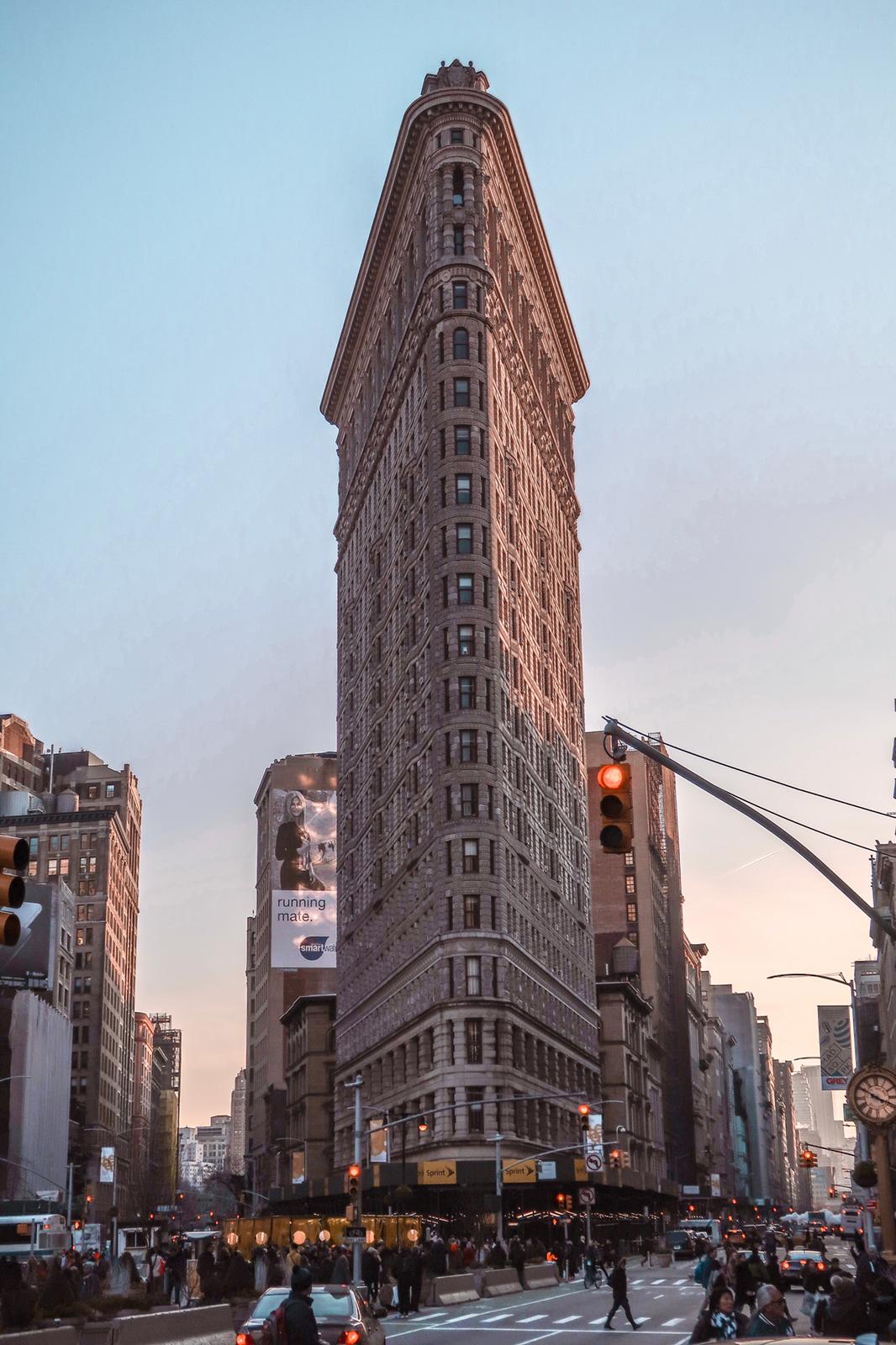
The Flatiron Building, also known as the Fuller Building due to its original owner George A. Fuller, is one of the most iconic and historic skyscrapers in New York City. Located in the Manhattan district, the building is known for its unusual and striking flat, triangular shape. Here are some interesting facts and details about the Flatiron Building:
The Flatiron Building was designed by architect Daniel Burnham and completed in 1902. The building is notable for its Beaux-Arts architecture and distinctive triangular shape, which resembles the tip of an iron (hence the nickname “Flatiron”).
The building is located at the intersection of Broadway and Fifth Avenue, where 23rd Street diagonally cuts through. This creates the triangular shape that draws attention.
The Flatiron Building stands at approximately 87 meters (285 feet) tall and, at the time of its completion, was one of the tallest buildings in New York City.
The building is constructed of brick and terra cotta, with a characteristic white façade. The façade is adorned with elegant ornaments and decorative elements.
The Flatiron Building is one of the first skyscrapers in New York City and has played a significant role in the development of high-rise architecture in the city. It is often regarded as a symbol of progress and modernization at the dawn of the 20th century.
Little Italy
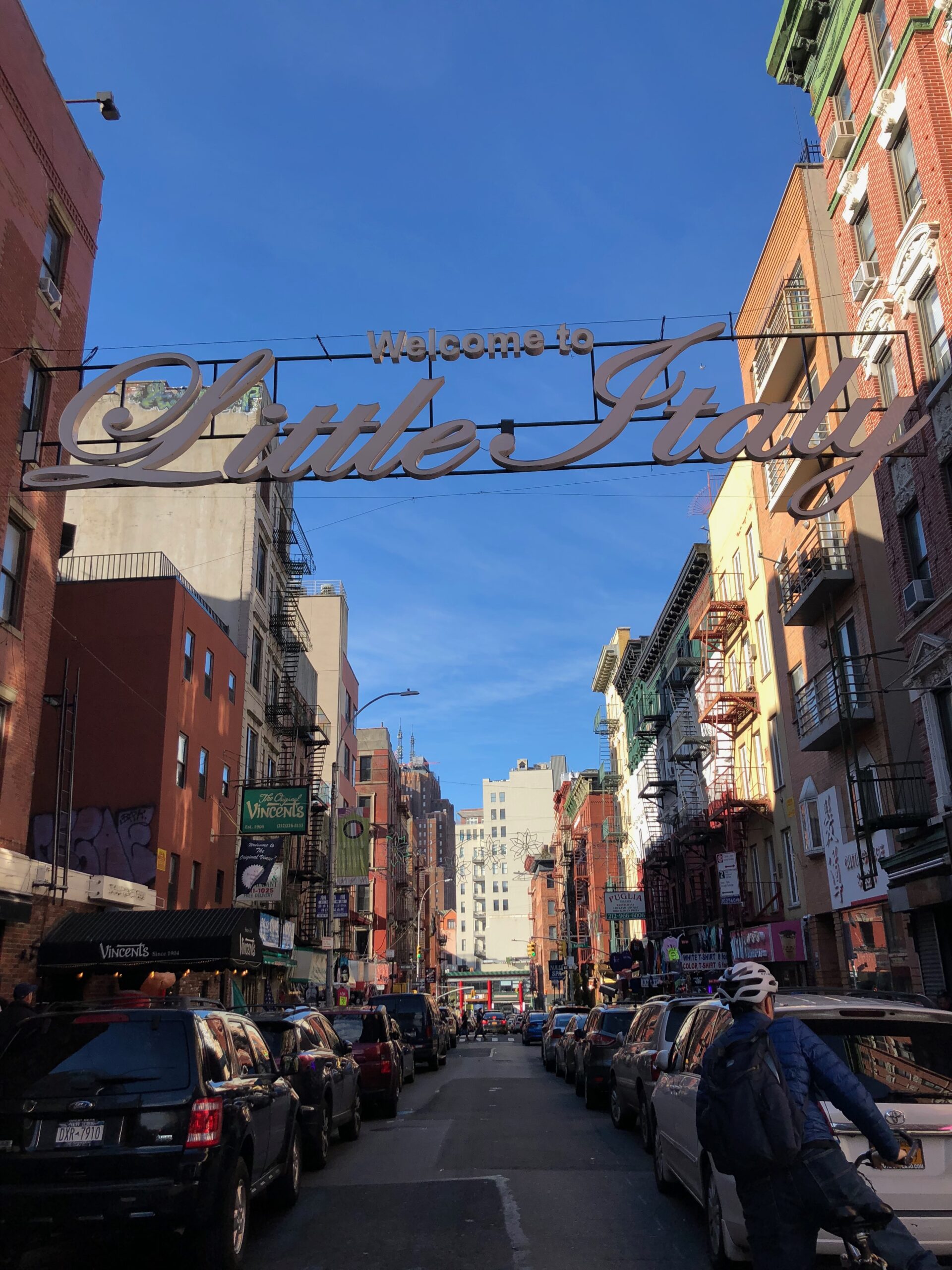
Little Italy is a historic neighborhood in Manhattan, New York City. The area is famous for its Italian heritage, culture, and culinary influences. Here are some interesting facts and details about Little Italy:
Little Italy emerged in the late 19th and early 20th centuries when a large wave of Italian immigrants settled in the area. They brought with them their culture, traditions, and especially their culinary specialties.
The traditional boundaries of Little Italy originally extended from Canal Street in the south, Lafayette Street in the west, Bowery Street in the east, and Broome Street in the north. Although the neighborhood has shrunk over the years, its center remains around Mulberry Street.
Little Italy is known for its Italian restaurants, bakeries, markets, and delicatessens. Visitors can enjoy authentic Italian dishes such as pasta, pizza, cannoli, and gelato.
The neighborhood has a rich Italian history and has contributed significantly to the cultural diversity of New York City. Today, there are still people of Italian descent living in the area, but the size of the neighborhood has diminished due to gentrification and the spread of other communities.
Rockefeller Christmas Tree
What a magical experience it must have been to visit New York City during Christmas in 2018/2019! The festive decorations, ice skating rinks, and the Rockefeller Center Christmas Tree are truly iconic symbols of the holiday season in the city. Here are a few more interesting details about the Rockefeller Center Christmas Tree, which you likely saw during your trip:
The Rockefeller Center Christmas Tree is one of the most iconic holiday traditions in the world, attracting millions of visitors every year to witness its stunning display. Here’s some background on this famous tree:
- Origins: The tradition of the Rockefeller Christmas Tree dates back to 1931, during the Great Depression. At that time, workers at Rockefeller Center set up the first tree, a modest pine adorned with homemade paper garlands. Over the decades, this simple tradition grew into the spectacular event we know today.
- Location: The tree is placed at Rockefeller Plaza, in the heart of Manhattan. The plaza becomes a holiday wonderland, with thousands of twinkling lights and beautifully decorated shop windows, particularly at famous locations like Saks Fifth Avenue and the NBC Studios.
- Tree Selection: The search for the perfect tree begins months in advance. The team behind the Rockefeller Center tree travels across the Northeastern United States to find the ideal tree, which is typically a Norway Spruce. The tree is selected based on its size, shape, and quality.
- Decoration: The tree is traditionally decorated with thousands of LED lights and topped with a sparkling star. Colorful ornaments and garlands are added, and the entire decoration process is kept a secret, only revealed during the official tree lighting ceremony.
- Lighting Ceremony: The Rockefeller Tree Lighting Ceremony is one of the most-watched events of the holiday season, often broadcast live on TV. The ceremony typically takes place in early December and features performances by famous artists, followed by the lighting of the tree, marking the official start of the holiday season in New York City.
Your visit to the city during this festive period would have allowed you to experience the magic of the holidays in one of the world’s most famous urban settings. The crowds can certainly be overwhelming, but there’s something special about the energy and festive spirit in the air during that time. Have any specific memories or moments from your trip that you’d like to share?